When a 15-location dental group decides to deploy AI-powered patient communication, the first question is usually "which platform should we use?" That is the wrong first question. The right first question is: "How should we deploy it?" The deployment architecture you choose will determine your patient experience consistency, your operational overhead, your ability to scale, and ultimately whether the investment succeeds.
The Three Deployment Models
Model 1: Fully Centralized
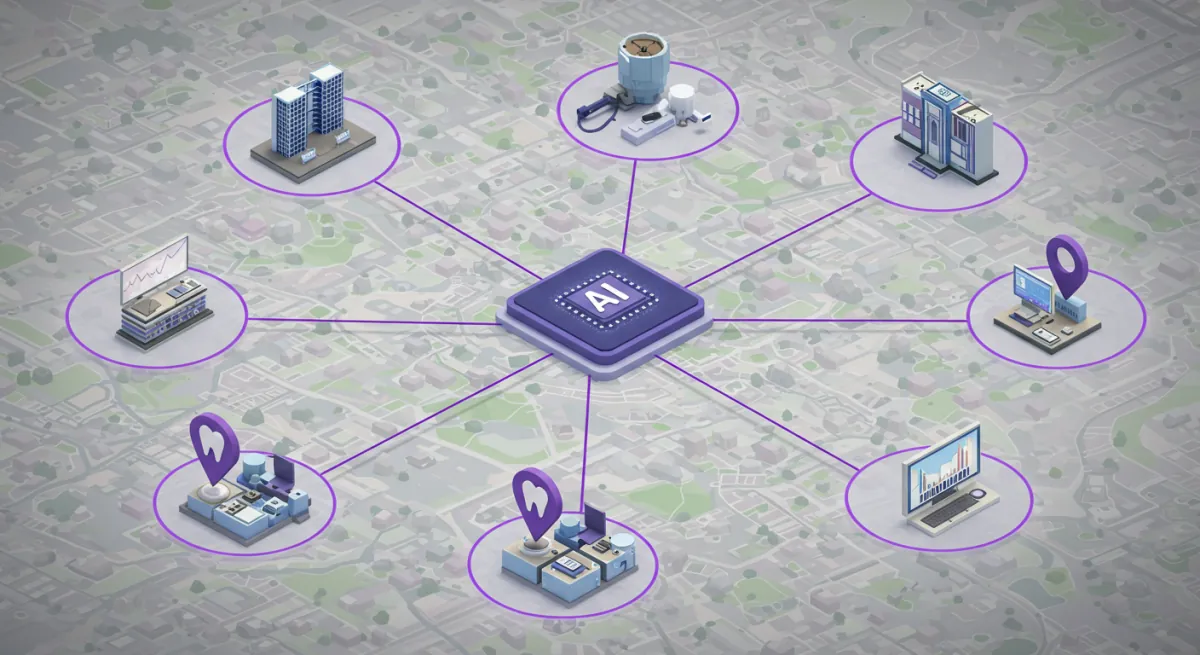
A single AI system handles patient communication for every location. One central team of 1-2 people monitors performance across all locations.
Pros: Consistent patient experience, lower operational overhead, easier compliance, cross-location scheduling.
Cons: Loss of local personality, complex configuration, single point of failure.
Model 2: Fully Decentralized
Each location operates its own independent AI instance, configured by local staff.
Pros: Maximum local customization, local ownership drives engagement, isolated failures.
Cons: Inconsistent patient experience, duplication of effort, quality control challenges, higher total management cost.
Model 3: Hybrid (Recommended)
A central operations team manages core AI configuration — greeting structure, booking workflows, escalation protocols, compliance. Individual locations customize within defined parameters: provider-specific scheduling rules, local hours, and tone adjustments.
Choosing the Right Model
| Factor | Centralized | Decentralized | Hybrid |
|---|
| Number of locations | 20+ | 2-5 | 5-20 |
| Brand consistency priority | High | Low | Medium-High |
| Local autonomy culture | Low | High | Medium |
| Central ops team available | Yes | No | Small team |
Per-Location Performance Dashboards
Regardless of model, multi-location groups need visibility into each office's performance:
- Call handling rate: Target 75-85%. Below 70% suggests configuration issues.
- Appointment conversion rate: Target 55-65%.
- Escalation rate: Target 15-25%. Above 30% means the AI lacks sufficient information.
- Patient satisfaction: Target 4.2+ out of 5.
- After-hours capture rate: Target 60-70%.
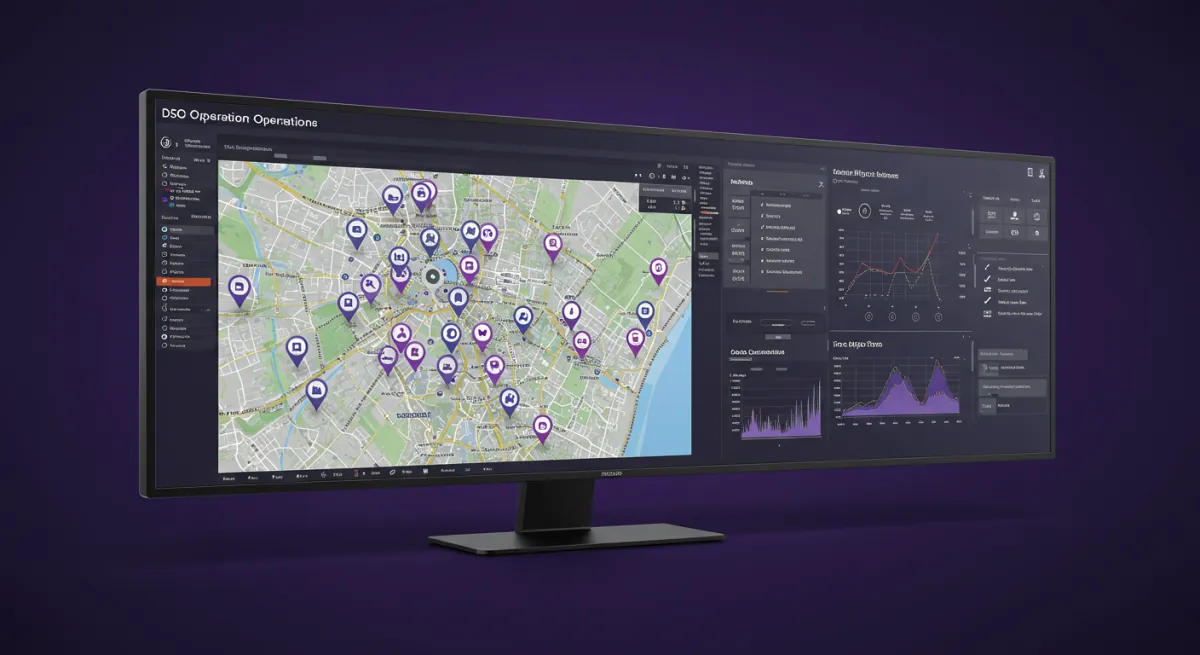
TensorLinks provides a single dashboard where group operators can see all locations ranked by each metric, identify outliers, and drill into specific call recordings.
Escalation Protocols for Multi-Location Groups
- During business hours: Escalate to the specific location's front desk with context.
- After hours, clinical urgency: Route to on-call provider or emergency line.
- After hours, non-urgent: AI handles completely — booking, answering FAQs, taking messages.
- Complaints: Route to a central patient experience team or flag for next-business-day follow-up.
The Bottom Line
A mediocre AI deployed with a well-designed hybrid model, clear escalation protocols, and per-location performance visibility will outperform a best-in-class AI deployed without operational structure. Start with your organizational reality and let that guide your deployment model.
TensorLinks supports centralized, decentralized, and hybrid deployments for multi-location dental groups.
Watch a Demo →
Tags: DSO, multi-location dental, centralized AI, dental group operations, patient communication, scalable AI deployment
Cross-Location Intelligence: The Hidden Advantage of Centralized AI
One often-overlooked benefit of centralized AI deployment is the cross-location intelligence it generates. When a single AI platform handles patient communication for all your locations, it creates a unified data layer that reveals patterns invisible to individual offices. For example, the system can identify that patients calling Location A frequently ask about services only offered at Location B, enabling cross-referral opportunities. It can detect that after-hours call volume at your suburban locations peaks between 7-9 PM while your urban offices see the heaviest traffic at lunch, allowing you to fine-tune escalation staffing. TensorLinks aggregates this multi-location data into actionable intelligence, giving group operators a view that no combination of individual-office reporting could provide. The AI supports 24+ languages across all locations, ensuring that demographic-specific communication needs at one office benefit from learnings across the entire group.
Implementation timeline matters significantly for multi-location groups. A phased rollout — starting with 2-3 pilot locations, validating performance over 4-6 weeks, then expanding region by region — consistently outperforms big-bang deployments. During the pilot phase, groups should baseline each location's call answer rate, booking conversion, and after-hours capture, then measure improvement at 30, 60, and 90 days. TensorLinks integrates with Dentrix, EagleSoft, Open Dental, and Curve, so groups running multiple PMS platforms across locations can still deploy a single, consistent AI layer. Typical full deployment for a 10-20 location group takes 60-90 days from pilot to complete rollout, with measurable ROI — usually 15-25 additional captured appointments per location per month — visible within the first 30 days at each site.
Frequently Asked Questions
Should a multi-location dental group use centralized or decentralized AI?
For most groups with 5-20 locations, a hybrid model works best: a central operations team manages core AI configuration (greeting scripts, booking workflows, escalation protocols, compliance rules) while individual locations customize within defined parameters (local hours, provider-specific scheduling, tone adjustments). Groups with 20+ locations that prioritize brand consistency benefit from a fully centralized model, while groups with 2-5 highly autonomous offices may prefer decentralized.
How do you maintain consistent patient experience across multiple dental locations?
Centralized AI ensures consistency by applying the same greeting structure, booking logic, and escalation protocols across all locations. TensorLinks allows group operators to create master templates that enforce brand standards while permitting local customization for provider availability, office hours, and services offered. Per-location performance dashboards track call handling rate, booking conversion, and patient satisfaction, making it easy to identify and address locations that deviate from group standards.
What KPIs should multi-location dental groups track for AI performance?
The five essential KPIs are call handling rate (target 75-85%), appointment conversion rate (target 55-65%), escalation rate (target 15-25%), after-hours capture rate (target 60-70%), and patient satisfaction (target 4.2+ out of 5). Groups should monitor these per-location and compare against group averages. Locations with escalation rates above 30% typically need better AI configuration, while those with conversion rates below 50% may have scheduling template or availability issues.
See How AI Can Work for Your Practice
TensorLinks' AI receptionist answers every call 24/7, books directly into your PMS (Dentrix, EagleSoft, Open Dental, Curve), handles texts and web chats, and runs automated recall campaigns — all from one platform.